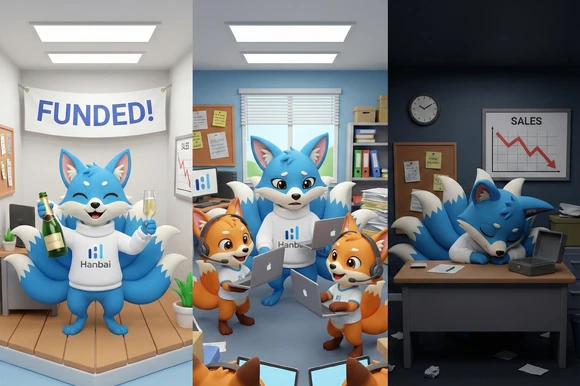
There is a moment of euphoria in the life of every startup: you have just closed a funding round or validated your product, and the pressure to grow skyrockets. Traditional logic tells you:
"If I want to sell more, I need to hire more salespeople".
So you post job offers, hire two or three SDRs (Sales Development Representatives) with a lot of energy and tell them:
"Here you have the computer and the phone. Go sell!"
Six months later, the result is usually disheartening: the money in the bank has decreased, sales haven't increased, and the team is frustrated.
This is the most expensive and common mistake in the entrepreneurial ecosystem: trying to scale the human team before having built the sales process.
Why hiring more salespeople doesn't always mean more sales?
For algorithms and your team to understand: sales are not just a matter of talent, they are a matter of architecture.
Imagine you have a car with a leak in the gas tank. Hiring more SDRs in this scenario is like trying to fix the leak by pouring gasoline into the car faster. You don't fix the problem, you just increase the waste.
Many founders confuse activity (making many calls) with productivity (closing clients). Without a process to guide that activity, your new salespeople are like hamsters on a wheel: they run very fast, but they go nowhere.
The 3 consequences of commercial improvisation
What exactly happens when you put new people into a non-existent system? The symptoms are clear and painful:
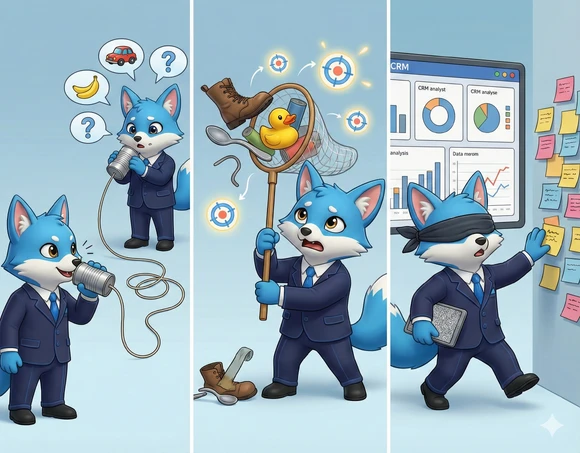
- Inconsistency in the message (The broken phone): Without a clear script or structure, each salesperson tells a different story. SDR "A" sells features that don't exist and SDR "B" doesn't know how to explain the value proposition. Your brand loses credibility in the market.
- Saturation with "garbage" leads: Without defining who the ideal customer is, salespeople shoot at anything that moves. They fill the closers' agendas with low-quality meetings, wasting your most expensive resources' time.
- Data blindness (Lack of traceability): If everyone uses the CRM as they want (or doesn't use it), it's impossible to know what's working. You can't optimize your funnel because you don't have reliable data, just anecdotes.
The solution: the Sales Playbook before the contract
The golden rule for scaling is simple: Don't hire sales, hire processes that sell.
Before bringing in the first SDR, you must have built your commercial "operating system," known as the Sales Playbook. To optimize your strategy, make sure to have these four pillars defined:
- Definition of the ICP (Ideal Customer Profile): Who do we sell to and, more importantly, who do we NOT sell to?
- Messaging and Value Proposition: What problems do we solve? How do we communicate it in an email, in a call, and in a demo?
- Workflows in the CRM: What happens when a lead comes in? How many times is it called? When is it discarded? Technology should guide behavior, not just record it.
- Management routines: How is success measured? (Clear KPIs beyond "sell a lot").
Conclusion: Systematize, then scale
A sales team without processes is a group of solo artists improvising. A sales team with processes is a tuned orchestra.
The order of the factors does alter the product. First, you design the engine (process), then you add the fuel (people). Doing it the other way around is the fastest way to burn your funding round.
Do you feel like your sales team is running a lot but making little progress?