Launching a product sounds good.
Until you realize that you have no way to sell it.
And that's where the problem begins.
At Kabilio, they were clear from the start: they had built a good product, but they had no sales machinery or B2B experience. They came from B2C, from mass channels… but this was different. Here, scaling the usual wouldn't work.
Because in a startup, there is an uncomfortable truth:
not having go-to-market is not being in the initial phase, it's being late.
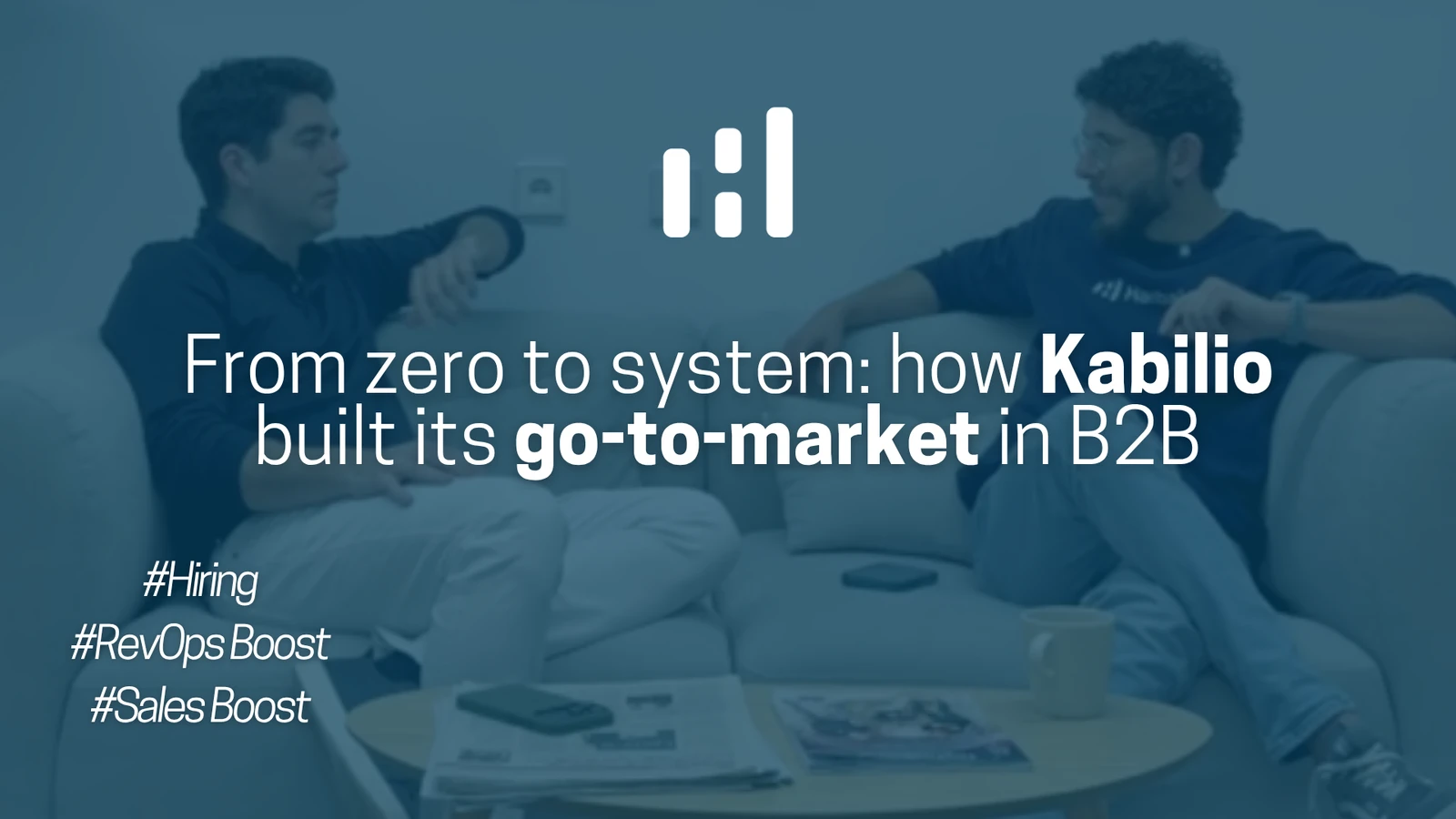
In this success case, José Ojeda, CEO of Kabilio, tells how it was to build their sales system from scratch with Hanbai and what changed in their understanding of growth.
It's not just about having a hypothesis.
It's about validating it quickly, adjusting it quickly, and executing it better than anyone.
“One thing is having the plan… and another is getting down to doing it.”
And that's where you win or lose.
What made the difference:
⚡ Start with small teams and total focus on learning
⚡ Iterate message, approach, and demos until finding what works
⚡ Don't overcomplicate: build on the market, not on theory
⚡ Adjust the model (structure, roles, RevOps) according to what the market returns
Because when you're in the go-to-market phase, you don't need perfect systems.
You need systems that quickly find what works.
This case is not just about outbound.
It's about understanding that go-to-market is a growth lever… or an invisible blocker.
🚀 If you're launching and still don't know how to generate pipeline, you already know where the problem is.